Virtual and hybrid meeting services combine live production expertise with reliable technology to connect in-person and remote participants seamlessly. ATR Treehouse supports these formats with 30 full-time certified designers and technicians, drawing from a 20,000-square-foot warehouse of professional-grade equipment sourced from over 100 leading brands, delivering coordinated planning, setup, and on-site operation for enterprise events.
Key Takeaways
Virtual and hybrid meeting formats require different compliance obligations and technical tool capabilities for successful execution.
ATR Treehouse’s 30-person team benefits from choosing meeting formats that match attendance capacity and engagement goals.
Virtual meetings connect each attendee through individual connections, enabling broader geographic participation beyond Providence, RI location.
Hybrid and virtual formats demand distinct planning strategies to ensure productive, efficient, and engaging experiences for all participants.
What’s the Real Difference Between Virtual and Hybrid Meetings?
Virtual meetings happen entirely online, with no physical room involved at all. Hybrid events combine in-person attendance with remote participation running at the same time. That distinction shapes which equipment, staffing, and connectivity plan a corporate event needs.
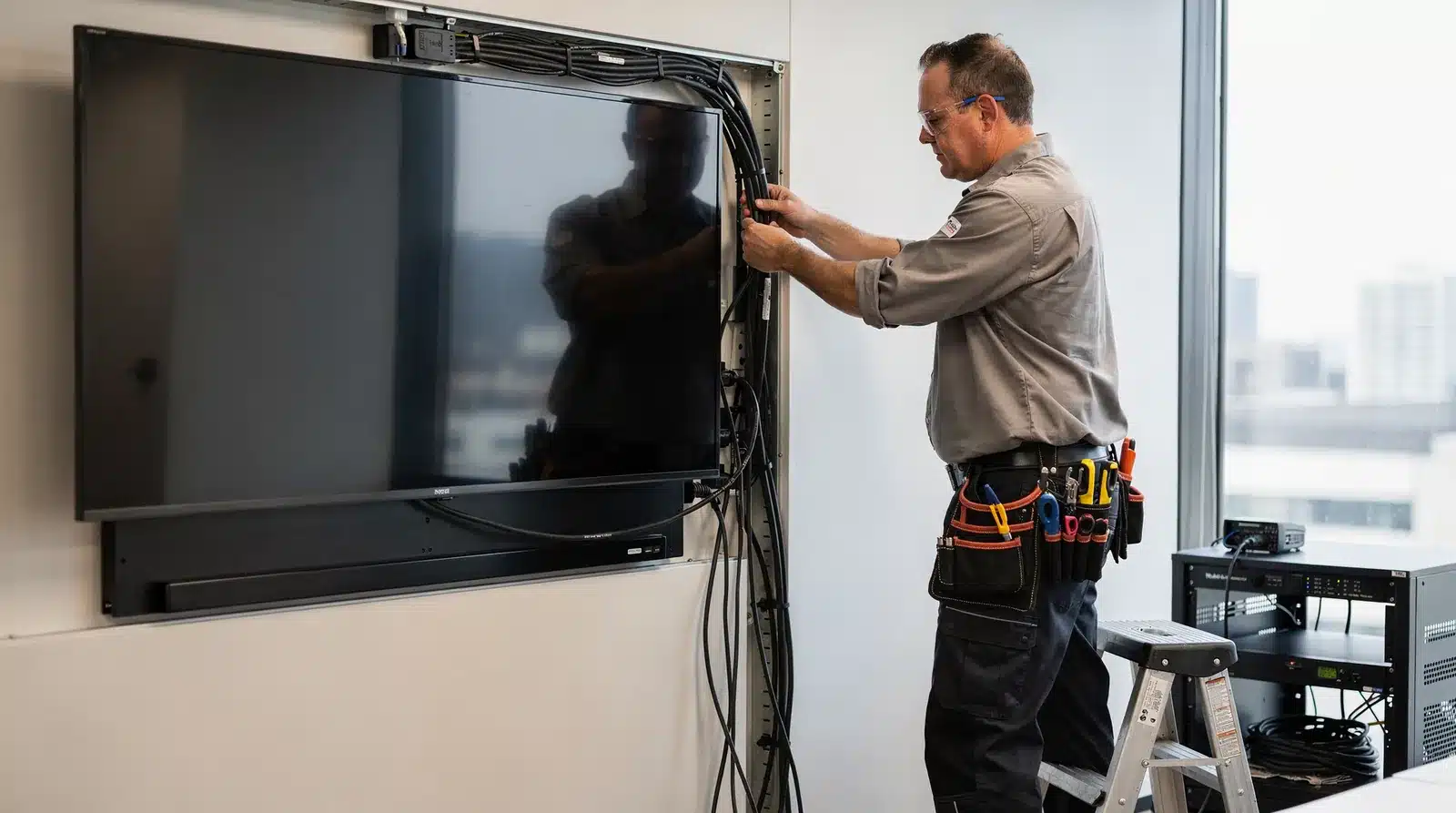
ATR Treehouse, headquartered in Providence, Rhode Island, supports organizations across the region in planning both formats. Its 30 full-time certified designers, technicians, and installers handle the technical demands of each setup, whether that means outfitting a single conference room for virtual meetings or coordinating cameras and displays across multiple locations for hybrid events. Every proposal, contract, and privacy policy reflects consistent brand name usage in formal documentation and privacy policy, giving clients a clear paper trail from first quote to final report.
How does a hybrid meeting differ from a virtual-only meeting?
A hybrid meeting places some attendees in a physical room while others join remotely by video or phone. A virtual meeting skips the room entirely; every participant connects through a screen. That gap changes what corporate webcast services and live streaming setups must support.
Planners who confuse the two formats risk under-equipping a room or overspending on gear nobody uses. Matching the format to the actual audience keeps budgets and outcomes aligned.
Which AV Components Power a Corporate Webcast?
A reliable corporate webcast depends on cameras, audio processing, encoding hardware, and network infrastructure working together as one system. Video conferencing and live streaming now sit at the core of daily operations for most organizations, giving teams the flexibility to work remotely without losing productivity. That shift changed what facility managers and IT leads need from their conference rooms and event spaces.
Meeting and event spaces can be outfitted with current video conferencing technology on request, tailored to fit hybrid workspace or event requirements. This matters for organizations juggling multiple room configurations across a single campus or a distributed office network.
What equipment does a webcast actually require?
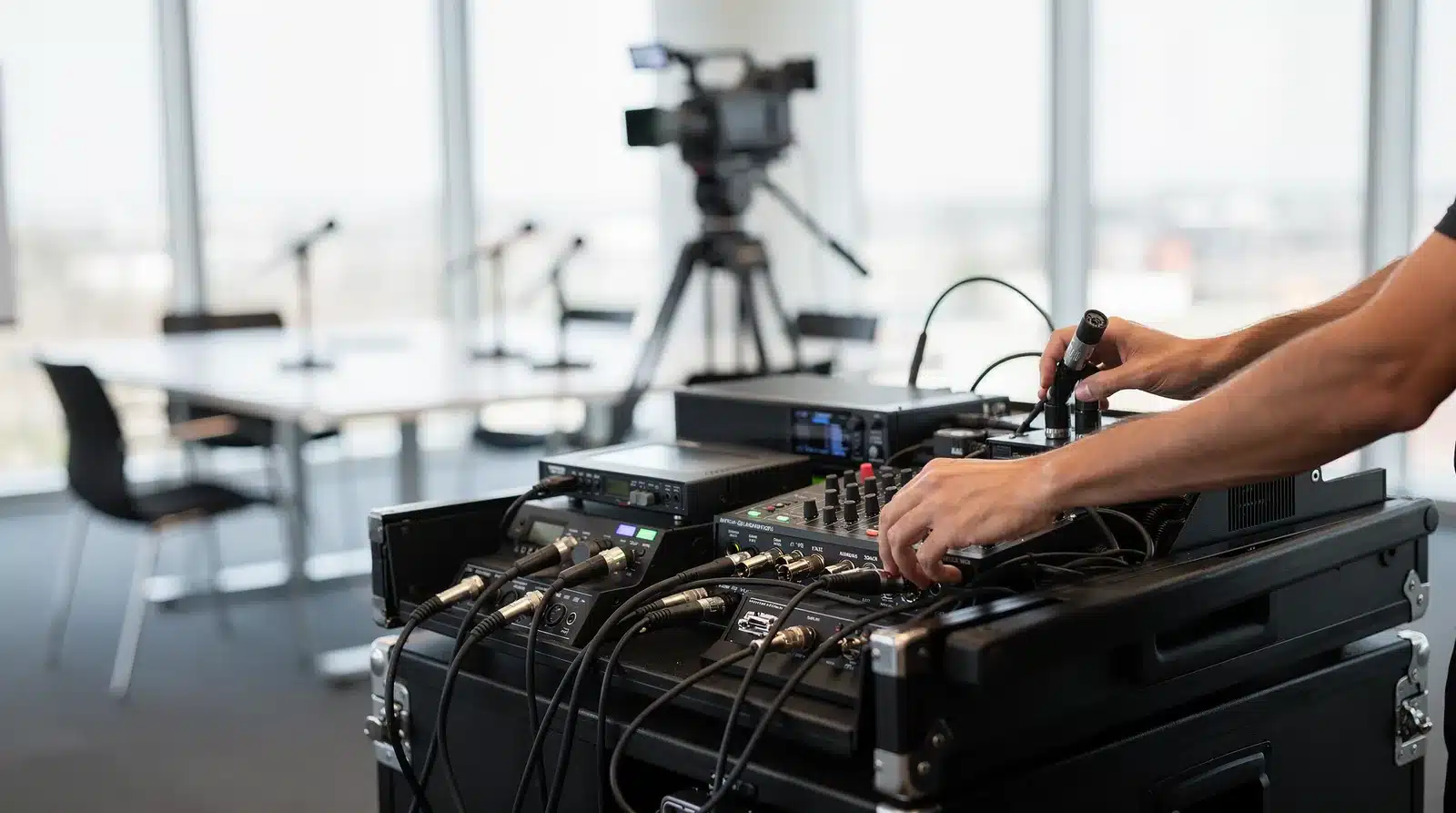
A functional setup includes cameras, microphones, mixers, encoders, lighting, and a stable network connection. Sourcing all of it from a single, well-stocked supplier avoids delays and mismatched components. A 20,000-square-foot equipment warehouse stocks the audio, video, and staging gear needed to produce a webcast or stream at scale, covering everything from microphones to full staging rigs.
Does brand selection matter for webcast hardware?
Yes — compatibility across the signal chain determines picture quality, audio clarity, and uptime. AV products from more than 100 leading manufacturers get sold and installed to support corporate webcast services with dependable, tested hardware. That range lets planners match gear to room size, audience count, and streaming platform requirements rather than settling for one-size-fits-all packages. For hybrid events and virtual meetings alike, this component-level flexibility separates a smooth broadcast from a stalled one.

How Do You Choose the Right Event Partner?
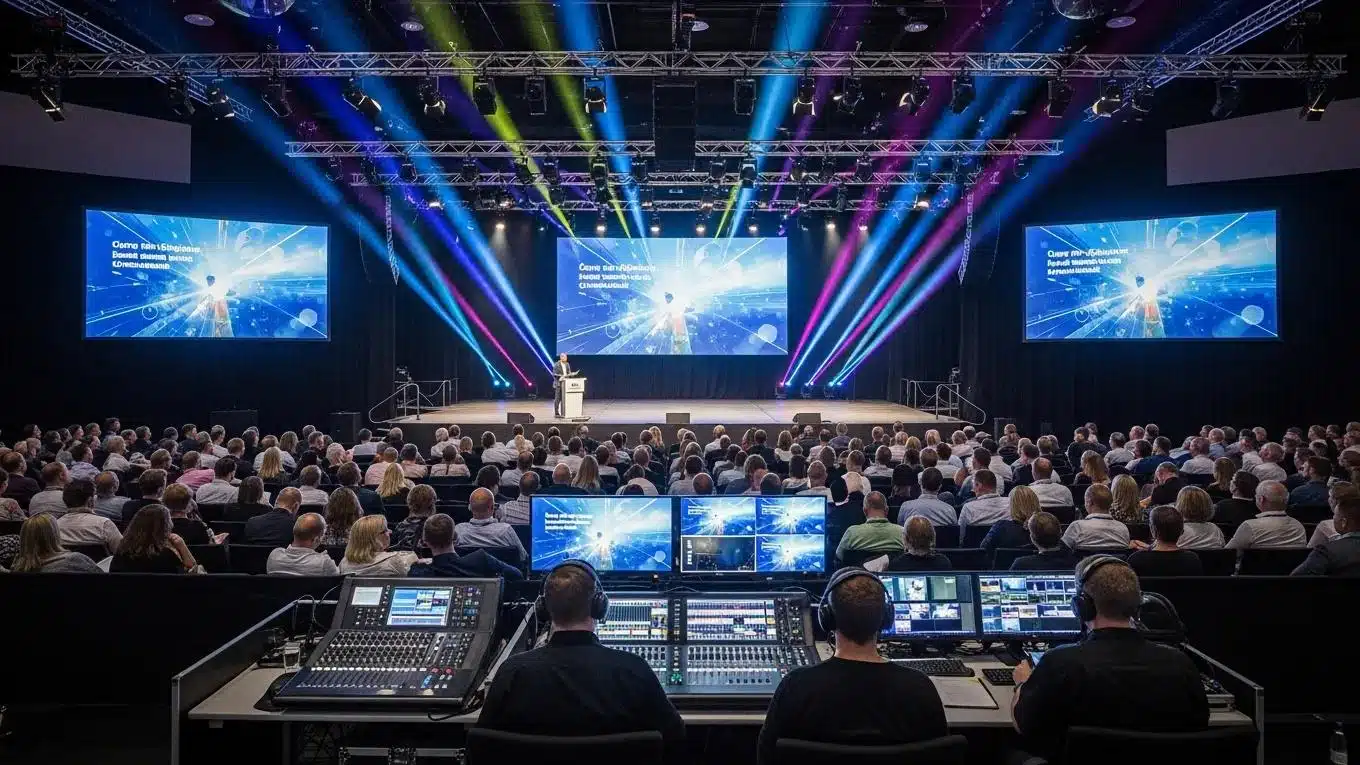
Corporate planners face a crowded field when sourcing sound systems, lighting rigs, and staging for hybrid events. Competition among providers is fierce, and technical complexity leaves little room for error. A single missed cue or dropped feed during live streaming can undo weeks of planning.
Start by weighing production quality. Providers who supply professional-grade audio and video equipment give corporate webcast services the clarity. Polish that hold an audience’s attention, both in the room and on screen. Weak sound or grainy visuals undercut the message no matter how strong the content is.
Support matters just as much as gear. Look for a team that stays engaged from the first planning call through the live event, greeting attendees and troubleshooting in real time rather than dropping off equipment and disappearing.
What Should Planners Verify Before Signing a Contract?
Confirm licensing, insurance, and permits are current, and check that delivery vehicles are DOT-registered and GPS-monitored for dependable arrivals. These details, along with proper brand name usage in formal documentation and privacy policy, signal an organized, accountable operation.
Virtual meetings succeed or fail on this foundation. Evaluate providers using a simple checklist:
Equipment quality and redundancy
On-site technical staffing
Licensing, insurance, and fleet reliability
Responsiveness before and during the event
FAQ
What is the main difference between virtual and hybrid meetings?
Virtual meetings happen entirely online with no physical room. Hybrid events combine in-person attendance with remote participation happening at the same time.
Who handles setup and technical support for these events?
ATR Treehouse’s 30 full-time certified designers, technicians, and installers handle the technical demands, whether outfitting a single conference room or coordinating cameras and displays across multiple locations.
What equipment do hybrid events require compared to virtual meetings?
Hybrid events need room audio, cameras, and streaming gear plus on-site crew and remote support. Virtual meetings rely on webcams, microphones, and a platform with remote coordination only.
Conclusion
In closing, virtual and hybrid meeting services represent a strategic investment in organizational connectivity and operational flexibility. By integrating professional audio, video, and control technologies with thoughtful production planning, organizations establish reliable platforms for internal collaboration and external engagement. ATR Treehouse delivers the expertise and integrated support necessary to execute these complex environments successfully, ensuring that your meetings achieve their intended impact regardless of participant location or format.